

Breast milk is
liquid gold.

Human evolution perfected it.Modern life complicates it.
We're using science to help you make the most of every drop.
Soapy. Metallic. Rancid.
If you encounter the off smells or flavors in thawed milk, it stops you cold. You worry your baby won't take it. That every hour you pump is wasted. It's not.
The chemistry
of stored milk.
Breast milk is a living fluid. Like a fruit that continues to ripen after being picked, the natural enzymes in breast milk continue to work during storage. Lipases break fats down. And naturally present antioxidants are depleted. So fats are further oxidized from exposure to air, causing those alarming tastes and smells. This is called rancidity. This is a natural chemical process that happens in all milk to some extent. But for some, it's a real problem.
Rancidity increase during frozen storage (1)

(1) Hung et al. 2018 BMC Pediatrics
The science of
keeping milk fresh.
After studying how milk changes during storage, the PumpKin research team got to work testing thousands of infant-safe food ingredients to find the right combination that could prevent fat breakdown and oxidation.
The result.
A proprietary combination of 3 common, infant-safe food ingredients that together delay fat breakdown and preserve breast milk freshness in the fridge or freezer.
And we're making this solution a reality.
Subscribe for the latest on our upcoming products.
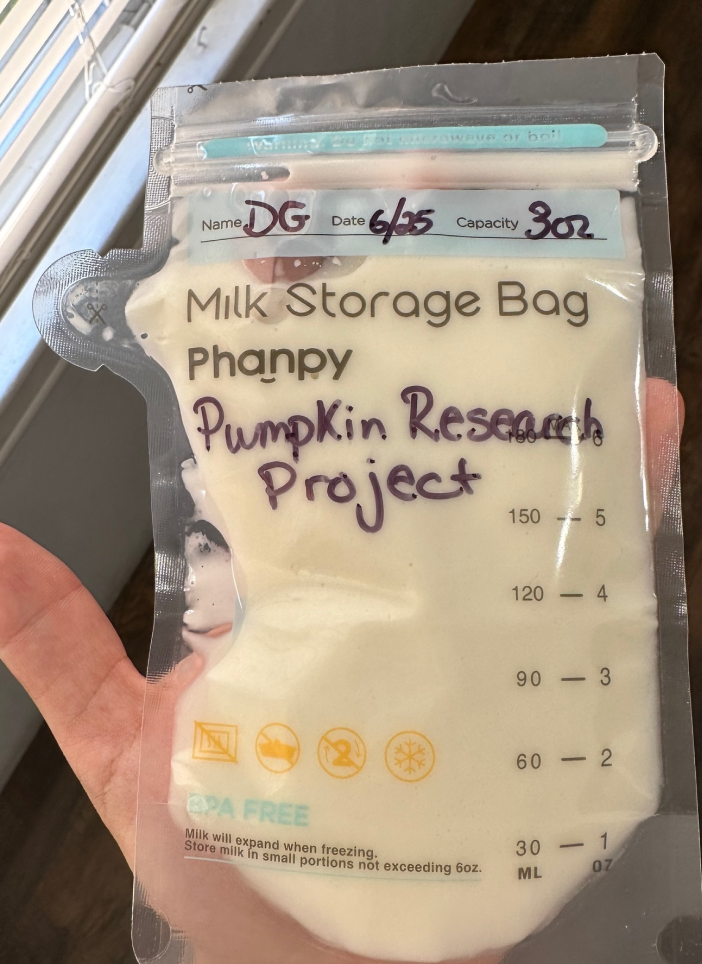
SubscribeBreast milk after 6 months of storage (2)

(2) Slipe et al. 2025. Foods.





Stacked with science.
Our solutions are built on real research, peer-reviewed and parent-informed, to get parents the solutions they need.
Extending Shelf Life of Frozen Milk
Peer-reviewed in Foods • June 2025
Key Insight
Our team screened 2,750 food-based compounds and identified an infant-safe organic paring that preserves key milk proteins and enzymes when stored.
Read the paperPumping Practices in the U.S.
Peer-reviewed in Breastfeeding Medicine • November 2025
Key Insight
A national survey of 877 parents showed how quickly pumping becomes part of postpartum life. Top challenges? Fatigue, time burden, and wasted milk.
Read the paperBreastfeeding and the Environment
Peer-reviewed in Front. Sustain. Food Syst • September 2026
Key Insight
Our team provided perspective on the role of breastfeeding in environmental sustainability. Human and planetary health are inseparable, and infant feeding sits at that intersection.
Read the paper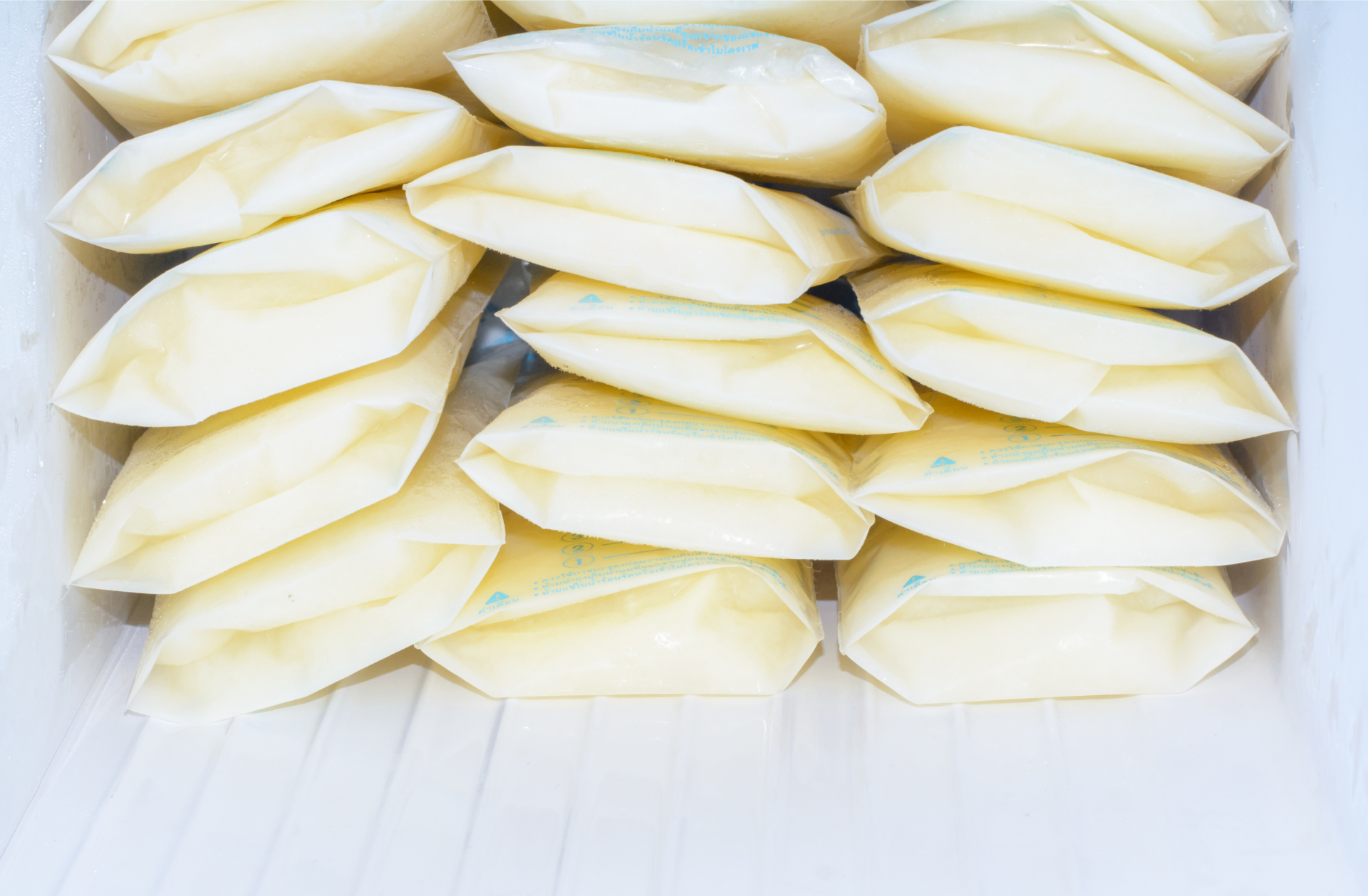
Got a stash? Put it to work.
We're studying how freezing milk impacts nutrients, enzymes, and freshness over time and we could always use your donation.
Donate Your Stash